Use of English for advanced learners 7 Forming new words - Thấm Tâm Vy
Báo tài liệu không phù hợp
Xem trước nội dung
Thẩm Tâm Vy, 27th, 2020 USE OF ENGLISH FOR ADVANCED LEARNERS - 07
USE OF ENGLISH ~ 08 FOR ADVANCED LEARNERS
FORMINg NEW WORDS
I. Write a word from the list below in each gap to complete the text.
bypasses ■ congestion ■ infrastructure ■ junctions ■ links ■ queues ■ ring
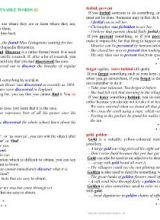
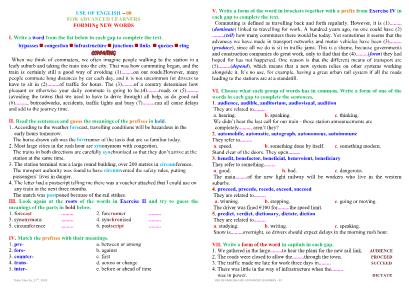
COMMUTING When we think of commuters, we often imagine people walking to the station in a leafy suburb and taking the train into the city. That was how commuting began, and the train is certainly still a good way of avoiding (1).........on our roads.However, many people commute long distances by car each day, and it is not uncommon for drivers to have to sit in (2).........of traffic for hours. The (3).........of a country determines how pleasant or otherwise your daily commute is going to be.(4).........roads or (5)......... (avoiding the towns that we used to have to drive through) all help, as do good rail (6)........., butroadworks, accidents, traffic lights and busy (7).........can all cause delays and add to the journey time. II. Read the sentences and guess the meanings of the prefixes in bold. 1. According to the weather forecast, travelling conditions will be hazardous in the early hours tomorrow. The horse-drawn cab was the forerunner of the taxis that are so familiar today. 2. Most large cities in the rush hour are synonymous with congestion. The trains in both directions are carefully synchronised so that they don’t arrive at the station at the same time. 3. The station terminal was a large round building, over 200 metres in circumference. The transport authority was found to have circumvented the safety rules, putting passengers’ lives in danger. 4. The letter had a postscript telling me there was a voucher attached that I could use on any train in the next three months. The match was postponed because of the rail strikes. III. Look again at the roots of the words in Exercise II and try to guess the meanings of the parts in bold below. 1. forecast ......... 2. forerunner ......... 3. synonymous ......... 4. synchronised ......... 5. circumference ......... 6. postscript ......... IV. Match the prefixes with their meanings. 1. pre- a. between or among 2. fore- b. against 3. counter- c. first 4. trans- d. across or change 5. inter- e. before or ahead of time
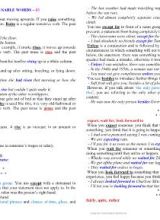
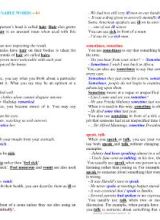
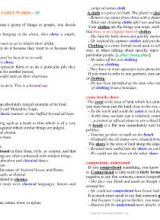
V. Write a form of the word in brackets together with a prefix from Exercise IV in each gap to complete the text. Commuting is defined as travelling back and forth regularly. However, it is (1)......... (dominate) linked to travelling for work. A hundred years ago, no one could have (2) .........(tell) how many commuters there would be today. Yet sometimes it seems that the advances we have made in transport networks and motor vehicles have been (3)......... (produce), since all we do is sit in traffic jams. This is a shame, because governments and construction companies do great work, only to find that the (4).........(form) they had hoped for has not happened. One reason is that the different means of transport are (5).........(depend), which means that a new system relies on other systems working alongside it. It’s no use, for example, having a great urban rail system if all the roads leading to the stations are at a standstill. VI. Choose what each group of words has in common. Write a form of one of the words in each gap to complete the sentences. 1. audience, audible, auditorium, audiovisual, audition They are related to......... a. hearing. b. speaking. c. thinking. We didn’t hear the last call for our train - those station announcements are completely........., aren’t they? 2. automobile, automatic, autograph, autonomous, autoimmune They refer to......... a. speed. b. something done by itself. c. something modern. Stand clear of the doors. They open......... 3. benefit, benefactor, beneficial, benevolent, beneficiary They refer to something......... a. good. b. bad. c. dangerous. The main.........of the new light railway will be workers who live in the western suburbs. 4. proceed, …
Trên đây là phần đầu tài liệu — bấm Đọc sách để xem đầy đủ.